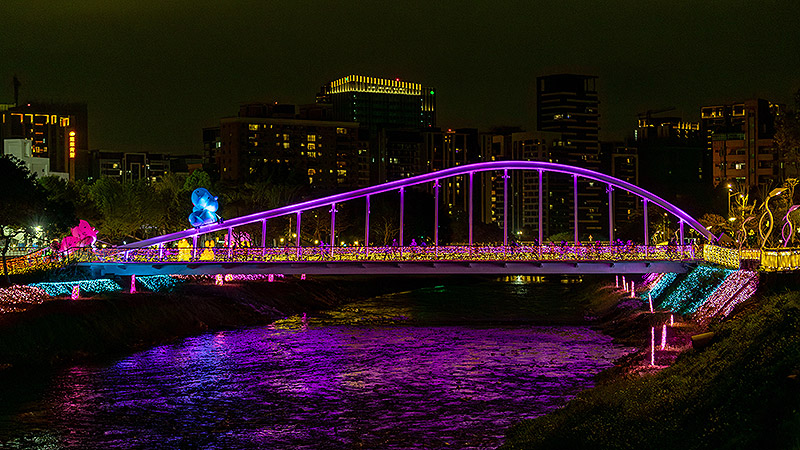
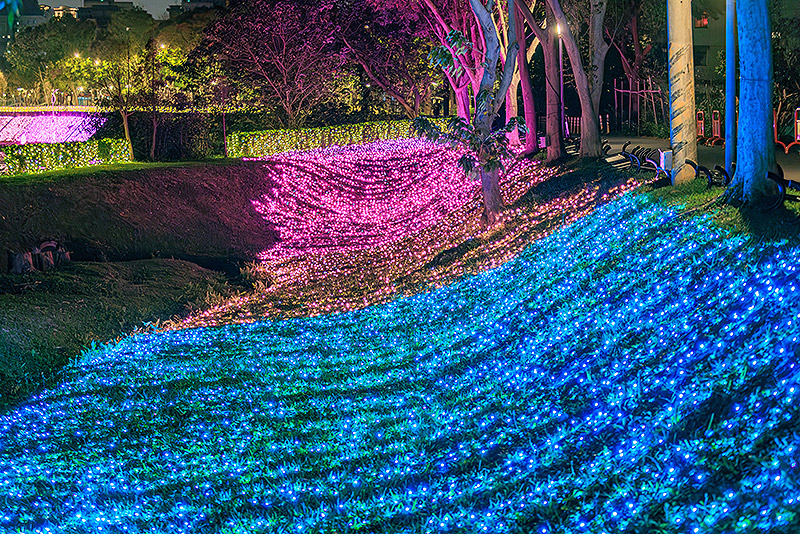
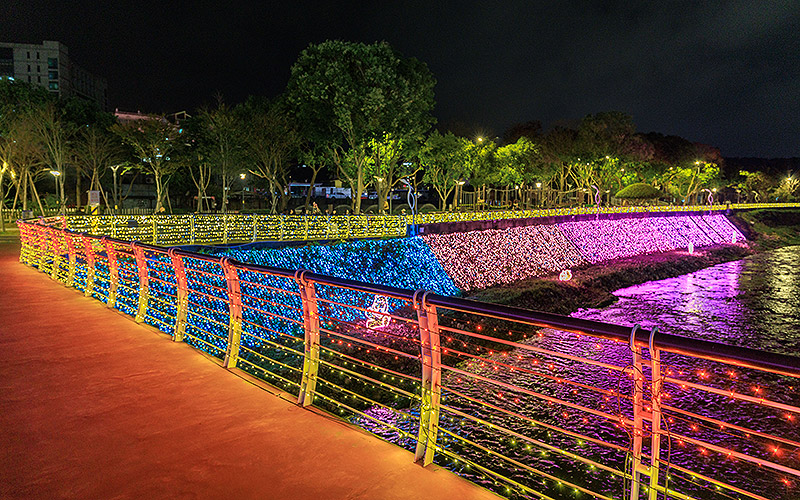
Beginning with Taoyuan’s distinctive pond landscapes, this installation weaves together the memory of water, the breath of forests, and the glow of the city at night into a walkable artistic flow. The curatorial focus lies on “local pond ecosystem transformation, forest conservation, vegetative art, and regeneration.” Subtle natural rhythms, such as shifting water levels, wind moving through tree canopies, and moisture returning to the soil, are gradually translated into the cadence of light and shadow, allowing visitors to form an empathetic connection with the environment as they move, pause, and look back. The exhibition extends along the Nankang River, where light art traces the waterway to illuminate riverbanks, bridge nodes, and pathways. Here, light does more than illuminate. It draws currents, responds to ripples, and rewrites the nighttime landscape, sketching a luminous urban waterscape.
“The Forest’s Living Cadence” emphasizes regeneration not as a decorative slogan, but as a design approach that allows lantern festivals and environmental responsibility to coexist. Recyclable, detachable, and reusable materials and systems are used, alongside ecologically friendly lighting strategies that reduce disturbance to habitats, enabling art and conservation to support one another. This is an artistic feast that weaves Taoyuan’s water and forests back into urban life. Ecology becomes visible through light, responsibility becomes clear through beauty, and every illuminated pond and glowing riverbank marks a step toward a more sustainable city.

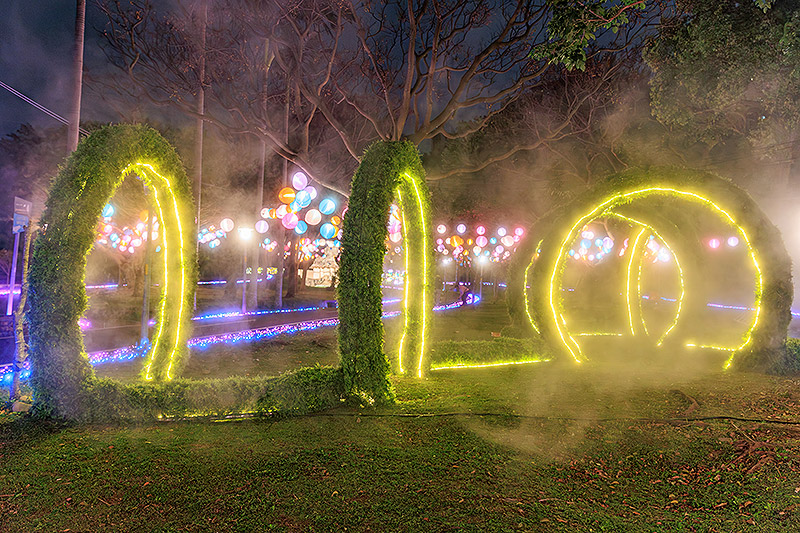
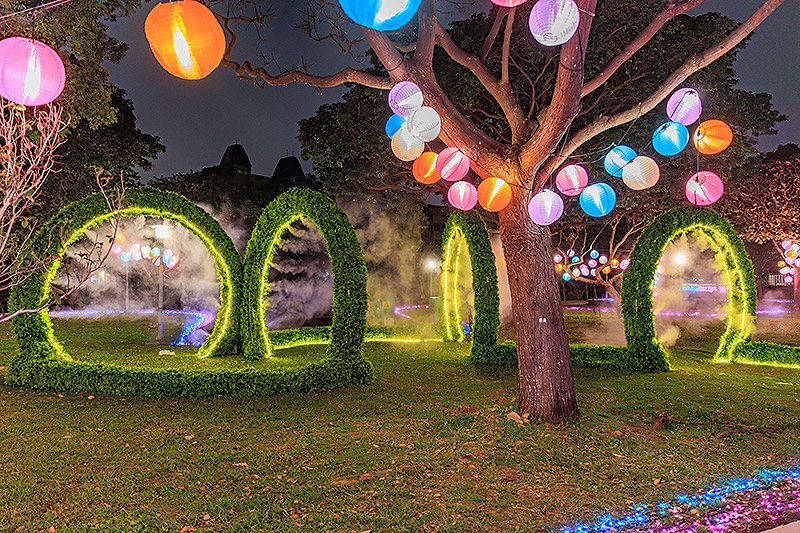
Step into “Forest Mist Theater,” where artist Pan gently shifts the rhythm of the city into “slow motion.” Layer upon layer of arched gateways are outlined in soft gold, their tops draped with cascading greenery that grows along the ground into a tranquil green pathway for unhurried strolling. A light mist rises around your feet and disperses at your fingertips, bringing a cool touch and faint floral scent. Low-volume forest soundscapes – birdsong, rustling wind, the whisper of leaves – surround you, softly placing visitors into a moment of breathable time.
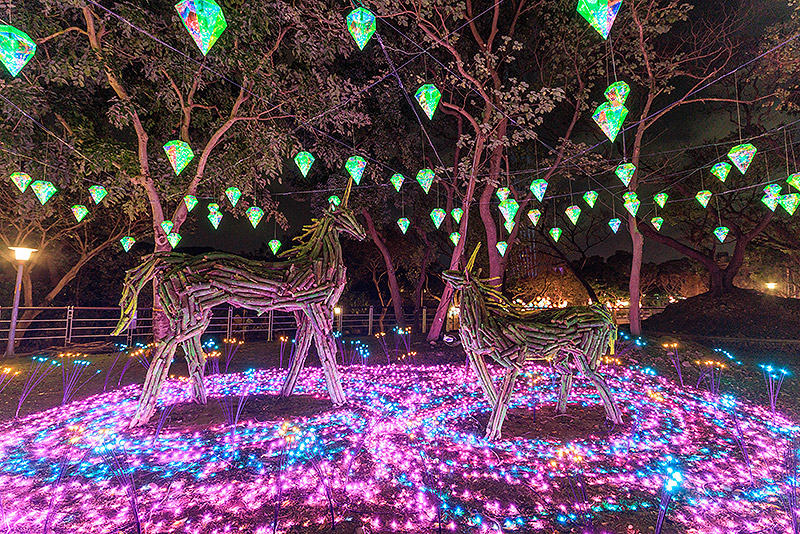
A discarded branch is rewoven into a living, breathing texture.Beginning with reclaimed wood from the mountains, artist Guo-ren Wang binds, threads, and fastens dead branches into the form of a mare and her foal. Their bones and muscles are shaped by tree rings, their manes extending into delicate fibers. Look up: crystals hang from the treetops like frozen dewdrops; Look down: points of light flow between green and lake-blue hues, glowing like moss at night. The entire space resembles a forest painting slowly illuminating – life has returned, and blessings have taken root.


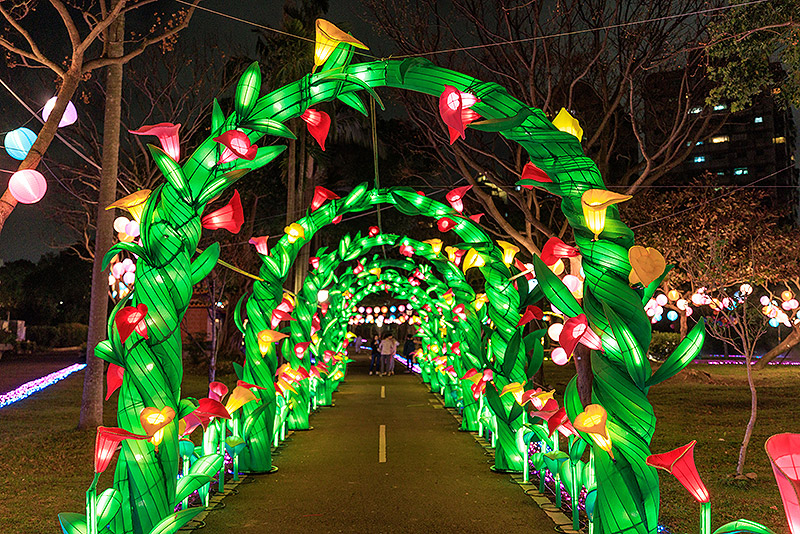
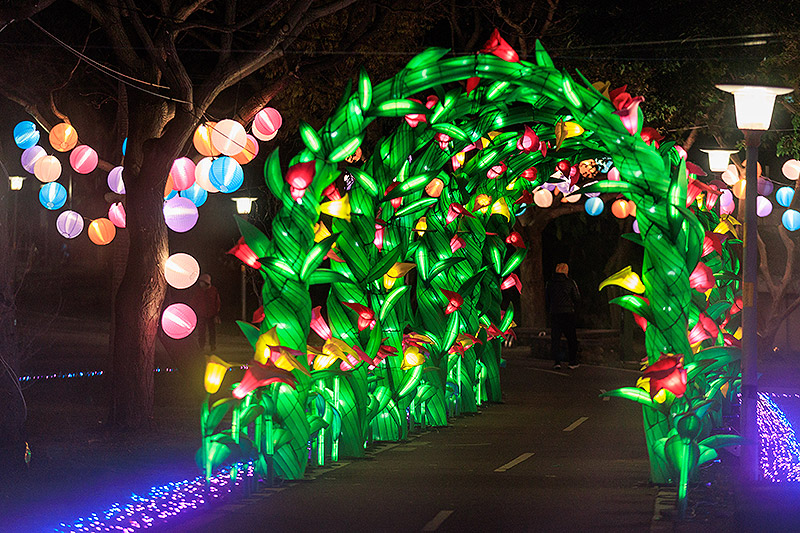
Artist Sammy Liu uses Taoyuan’s colorful calla lilies as the central motif, applying traditional lantern-making techniques to transform a once-silent garden path into a breathing corridor of light. The flowers are not placed beside the road; they naturally grow into archways, making visitors feel as though they are walking through a floral path blooming in the night.
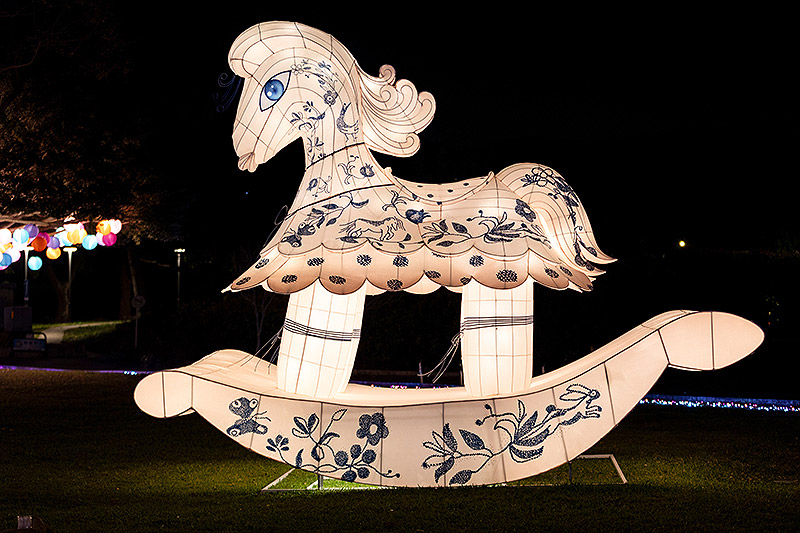
Created by Spanish artist Lourdes Salcedo Tavira from an international contemporary art perspective, “Peachy Little Pony” takes the childhood rocking horse – a shared memory that transcends nationality, language, and culture – and magnifies it, softens it, and illuminates it. At first glance, viewers understand what the artwork is saying: a time of innocence that everyone once held.
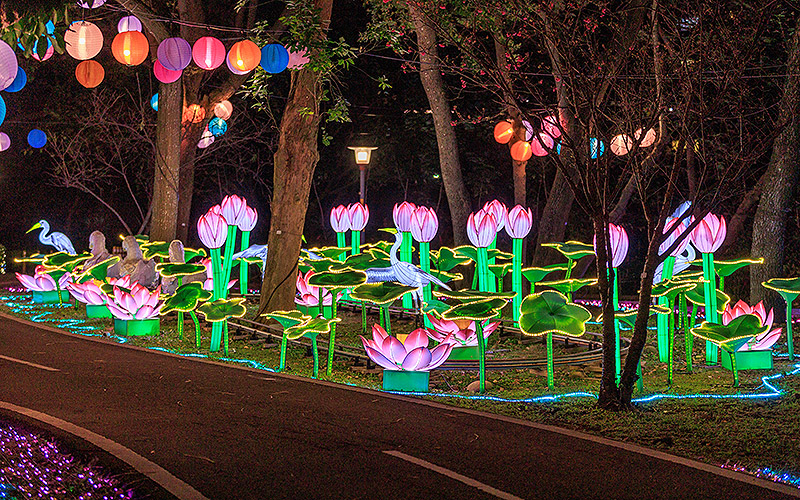
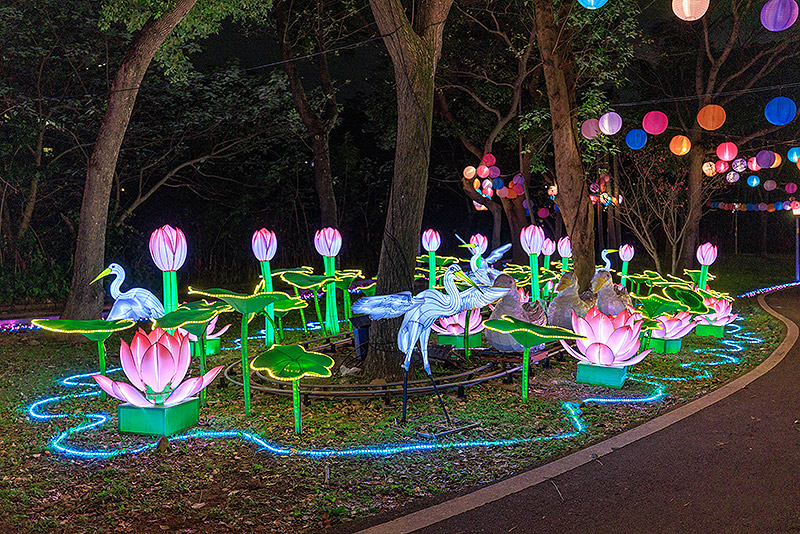
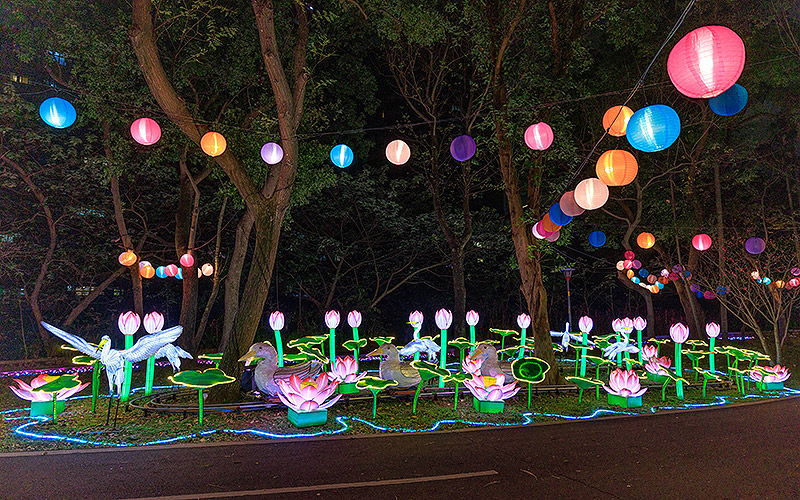
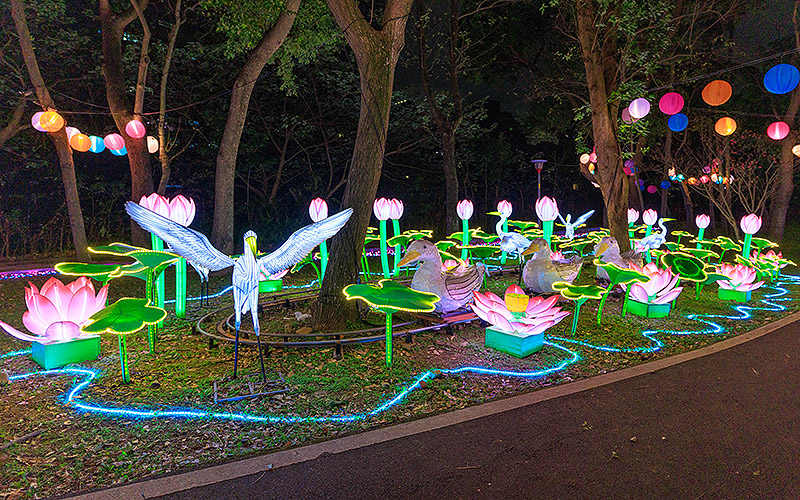
Lotus leaves spread across the space to form a luminous water landscape, with egrets resting among them – symbols of peace, safety, and auspicious arrival. At night, petals emit a warm, gentle glow. Up close, visitors can sense the dynamic feeling of “flowers breathing,” naturally pausing to linger and take photos. The installation expresses its design language through mechanical motion of “cyclical blooming,” reinterpreting prosperity in a contemporary way: “Prosperity” means a heart at ease; “fortune” means reunion. This opening and closing lotus light becomes the lantern festival’s most tender blessing, illuminating everyday life into a blooming spectacle.
Inspired by the idea that “leaf veins are waterways,” the outline of each lotus leaf is lit, with light flowing outward along the veins – like a pond suddenly coming alive at night.
Three water ducks circle along the “leaf-edge waterway,” leaving faint ripples behind, as if writing flowing calligraphy across the night.
Ground light trails shift in gradients of green and lake blue, evoking the captivating scenery of a pond.
Egrets are indicators of ecological health in pond environments. After nightfall, the egrets respond with slow motions of spreading and folding their wings, creating a dreamlike scene – as if they are stepping out of a painting.
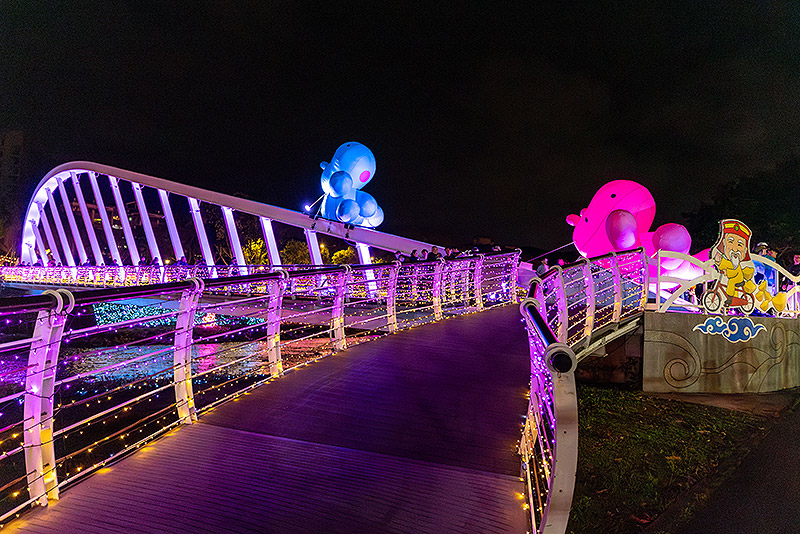
On the Lantern Festival night, Qingxi Bridge becomes more than a crossing – it transforms into a meeting illuminated by blessings. Two round, childlike inflatable figures cling to the bridge sides, greeting passersby with exaggerated yet soothing poses, like smiling lucky stars accompanying your walk along this path of light. Centered on the meaning of “togetherness,” the work reminds us that good fortune doesn’t need to be chased – it quietly approaches when you walk side by side with family and friends.


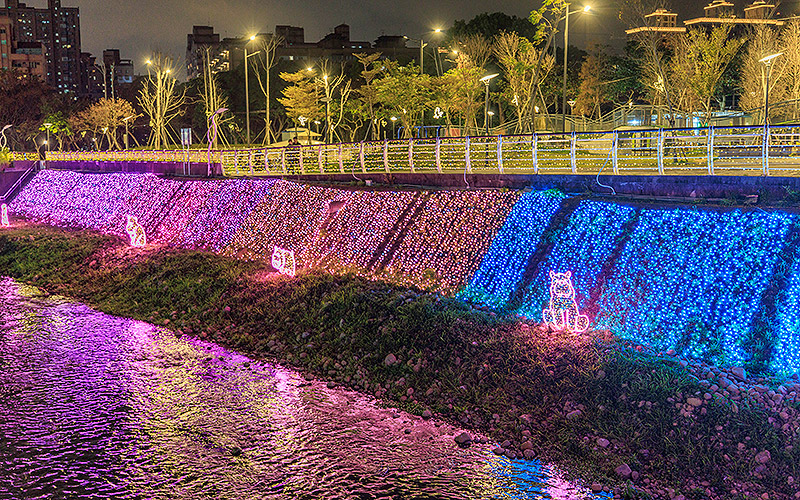
“Forest Rhythm Light Whisper” is situated along the banks of the Nankang River, weaving the woodland breath of “The Forest’s Living Cadence” with riverside illumination into a nocturnal poem that seems to speak. Featuring playful, endearing hippos as its protagonists, the installation unfolds through multi-faceted glowing lantern forms – some seated in stillness, others resting low, others gathered in quiet groups. Together, they translate the riverbank’s breeze, the soft rustle of leaves, and the rhythmic pulse of flowing water into a gentle, universally legible language of light.